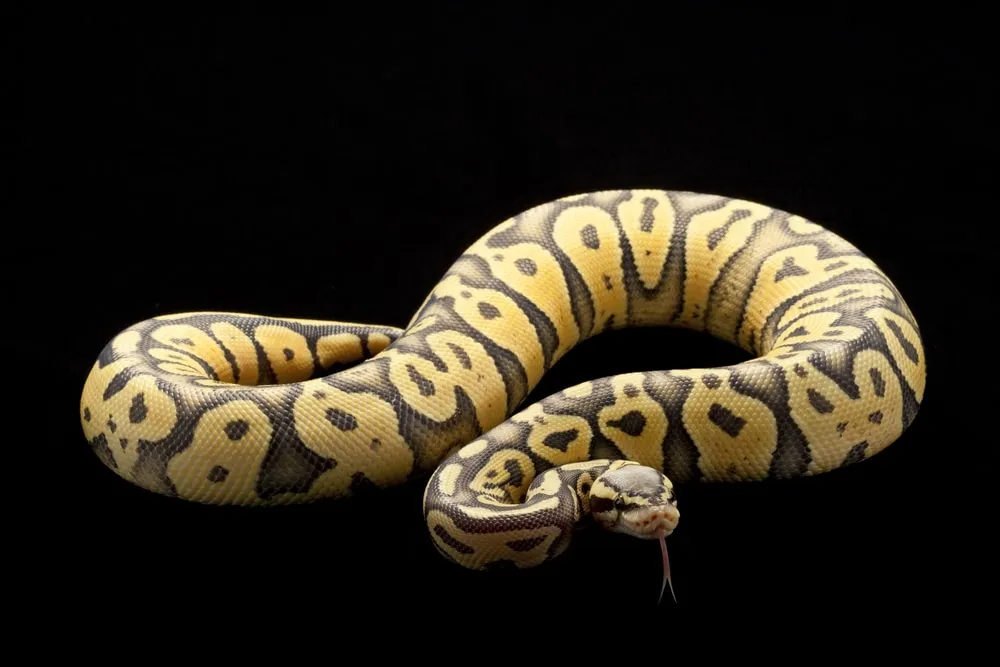
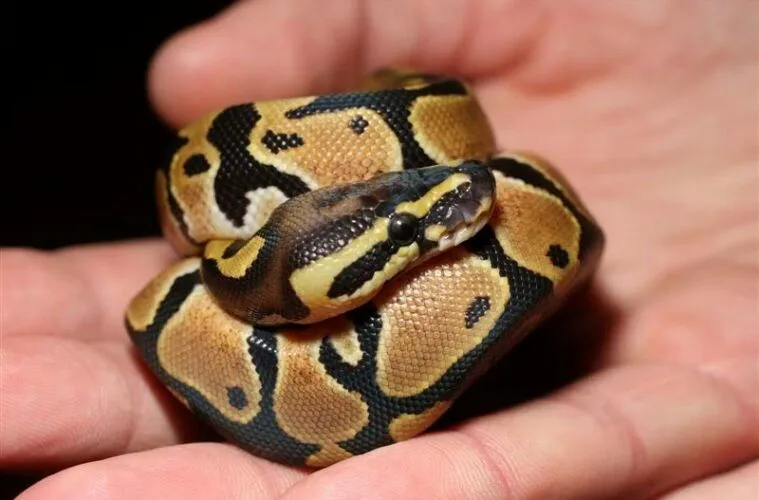
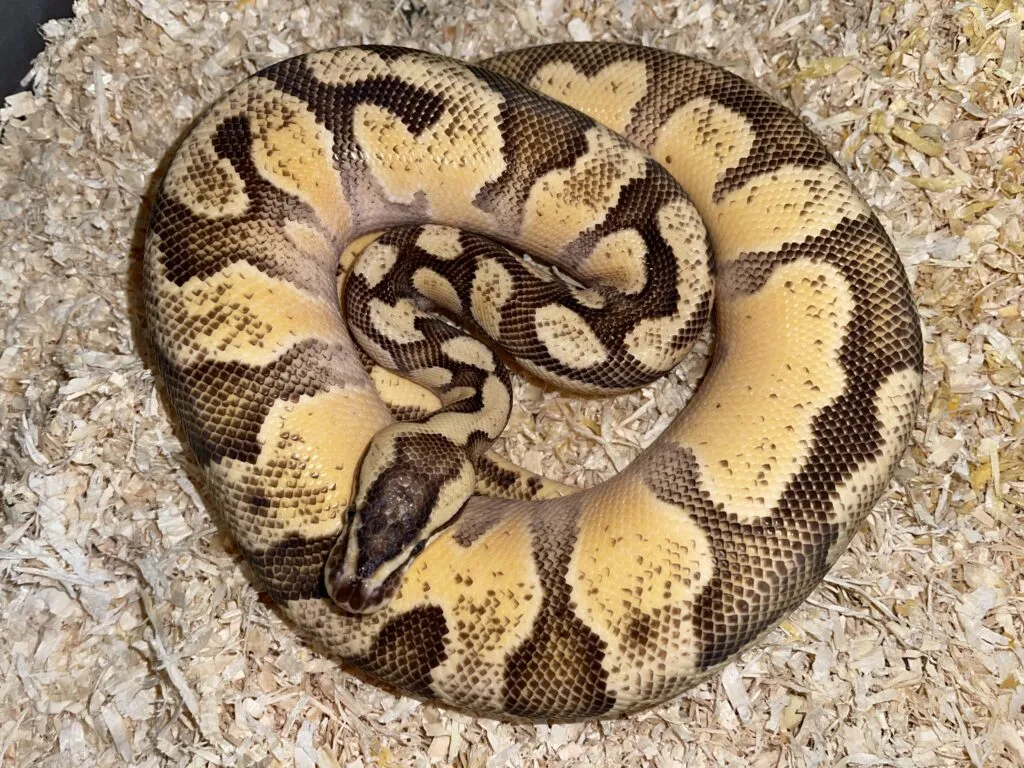
The real python (scientific name: Python regius) is also known as Pitone Ball (Ball Python) because of its classic defensive position in which it protects the head, fragile and delicate, enveloping it in the spires and taking this particular spherical shape, hence "ball".
It is a small African python whose habitat is Central-Western Africa, where it spends its days hidden in burrows of underground rodents waiting to capture a misguided rat or rat who decides to take refuge in his own hole.
Royal python in the classic "ball" position
Real Pitons are very raised worldwide mainly for 4 factors:
The ease of breeding
The incredible docility
The limited size
The quantity and beauty of color variations (Morph)
They do not have particular attention in breeding and are also recommended to those who approach for the first time in the world of reptiles, knowing obviously first about how to keep them (stabulare) at best.The Python regius have an average length that varies between 1.3 and 1.5 meters with some rare exception but never exceeds 2 meters of length for up to 3-4 kg of weight.
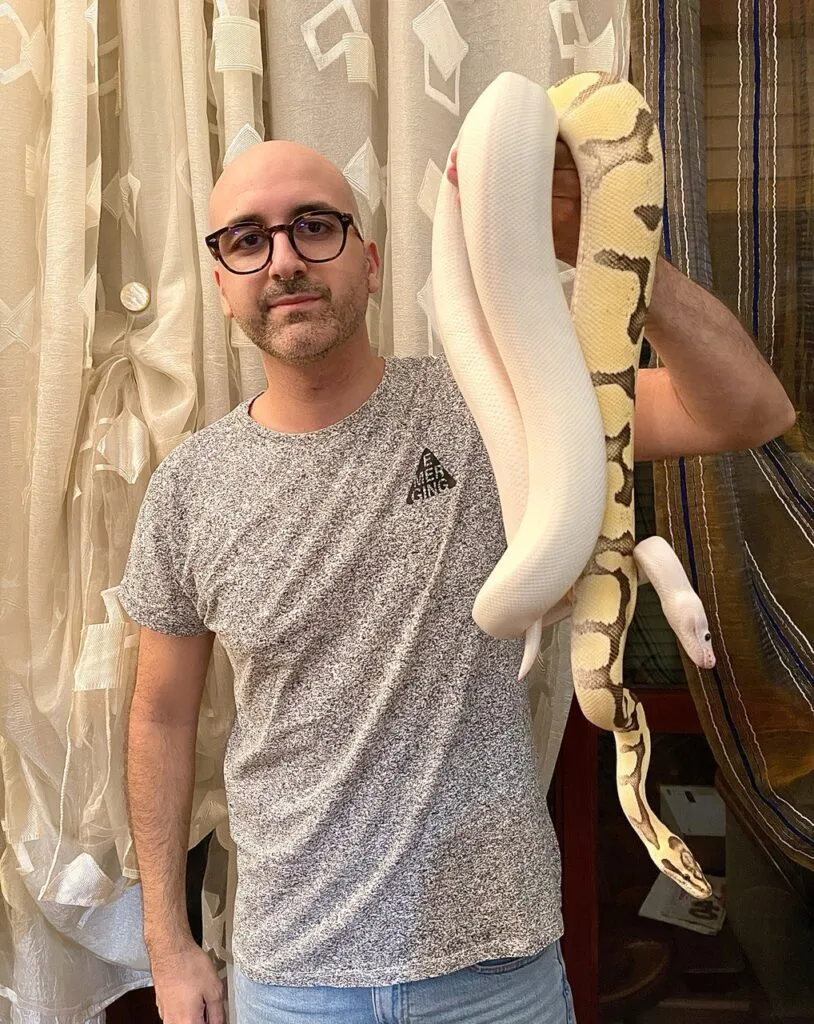
Photo with two adult females of real python (2-2.5 kg approximately)
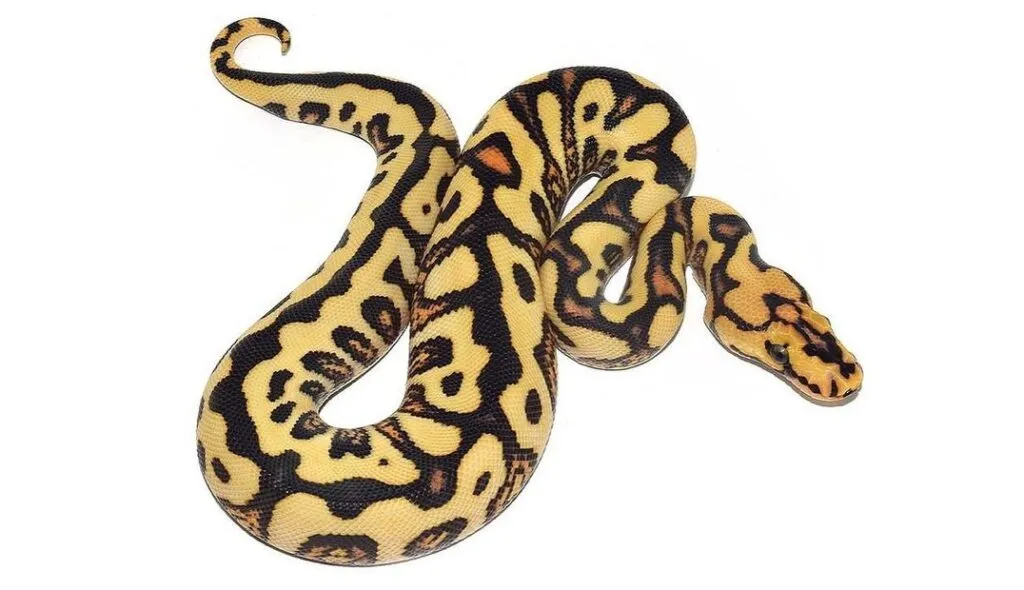
Since the early 1990s they have been selected in the countries of origin in order to isolate and amplify certain genetic traits (colorations), amateur breeding has contributed then to the birth of an incredible variability of designs (pattern) and colors, making them real modern works of art, very far from the original color Ancestral (Normal).
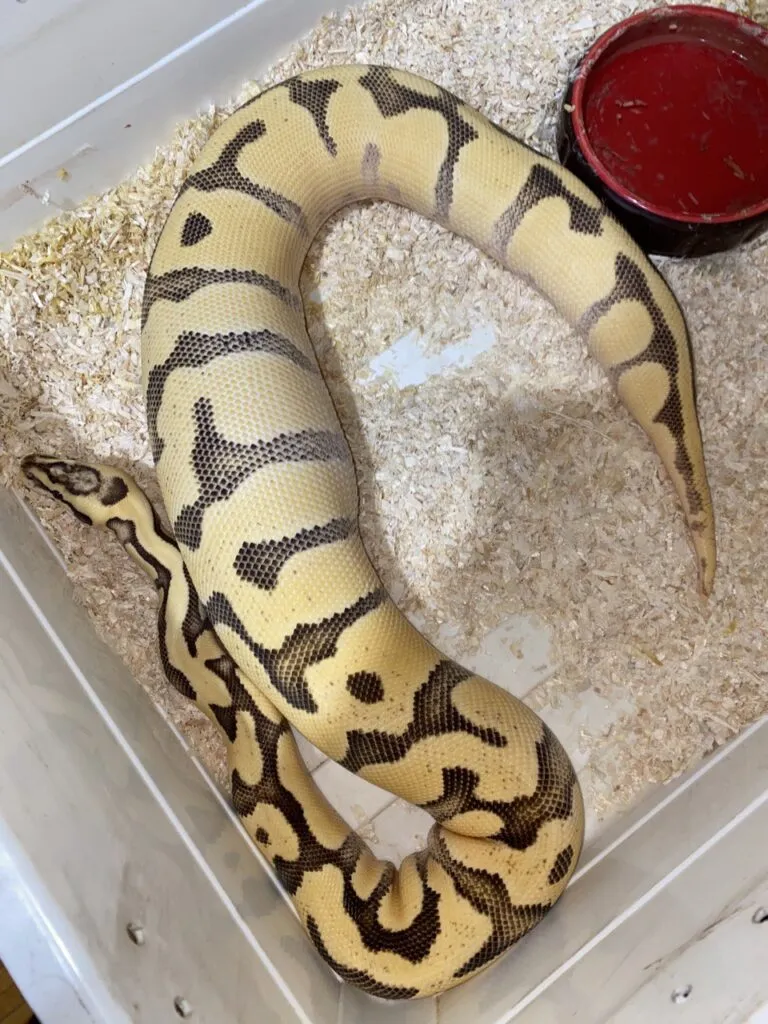
Real Pitone - Morph: Redstripe YB Spotnose Desert Ghost Clown - Property: KINOVA Reptiles
I Royal Pistons can be safely raised in the house, even in the apartment, do not need special and voluminous spaces. In order, however, to find the perfect and ideal habitat in order to keep them to the best, we must make a reflection on how they normally live in nature and what their needs are.
The Pitoni ball mainly seeks one thing: protection.
In nature they live hidden, in the dark, tight in a hole with dilated edges against the walls so that they feel wrapped and protected. Although there are now dozens of generations who no longer live in Africa, this need for protection remains; it means that we can also build a teca that faithfully reproduces a hectare of prairie of 20 square meters but at the time when we put a small and cramped tana we will find our little Pitone almost always hidden inside.
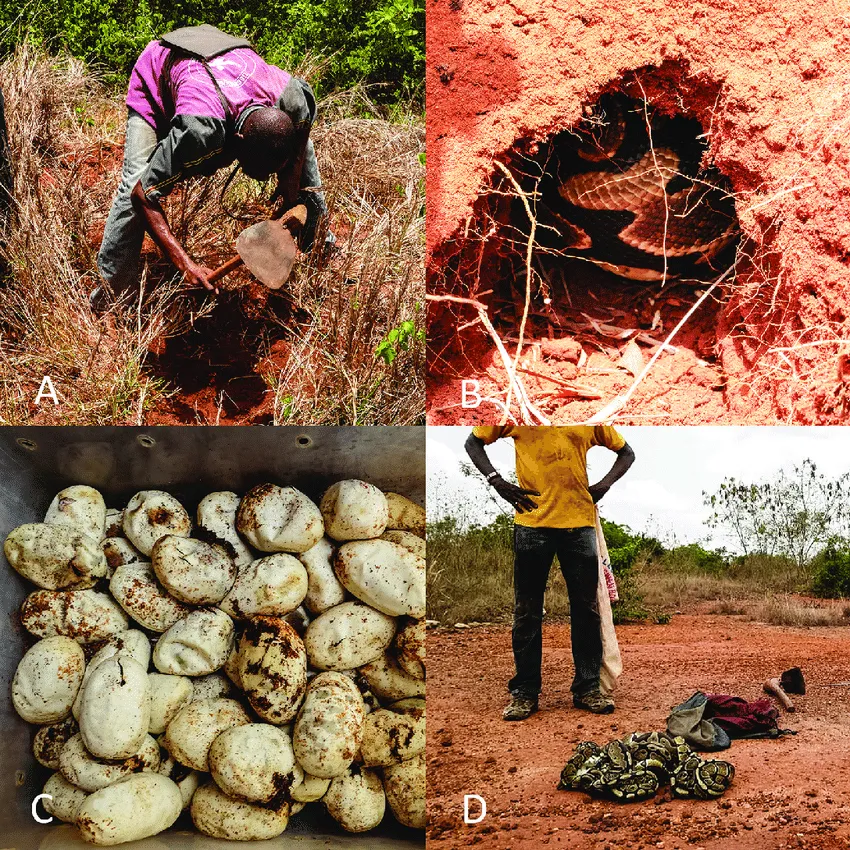
A hunter of West African Royal Pitons who digs in search of underground burrows
I recommend adopting definitive solutions in the breeding of a real python in the early stages of life, when the snake is only a small baby, because in this period it grows very fast and it is not recommended to put it in a teca with a too big tana because it could cause disorientation and inappetence (it allows to eat).
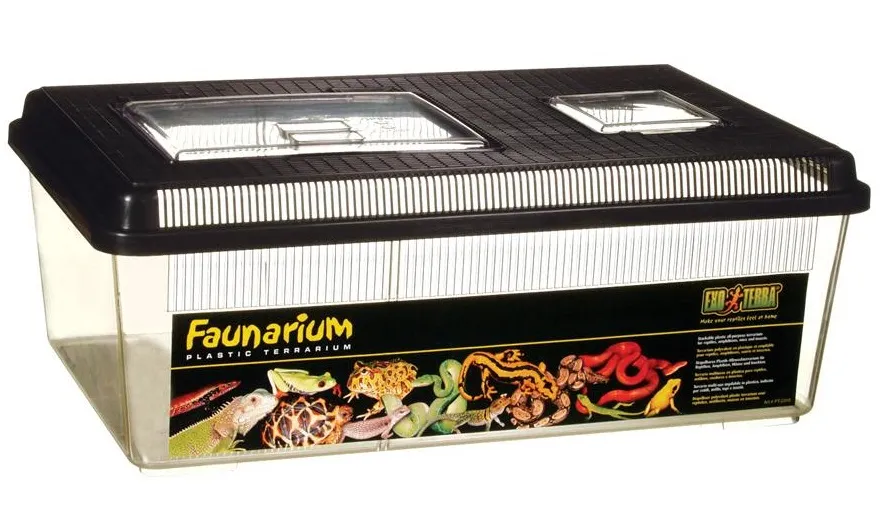
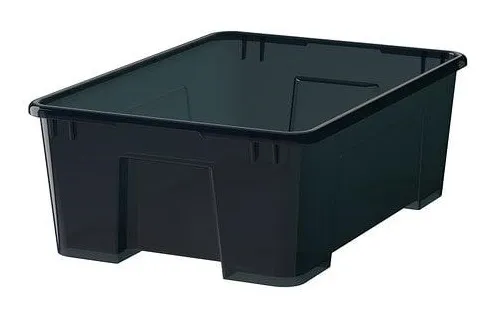
Instead, as a first approach the use of a plastic box large to the maximum 35x25cm, you can opt for a Fauna-box, easily available in any gardening center, or choose a DIY solution by adapting one of the many plastic boxes of Ikea (very used is the Samla line).
Fauna Box - Exo TerraSamla Line Box - Ikea
As you can see both boxes are developed mainly on the surface rather than in height, this because not being the real Pitons of the great explorers, do not need a very developed teca in this last dimension.
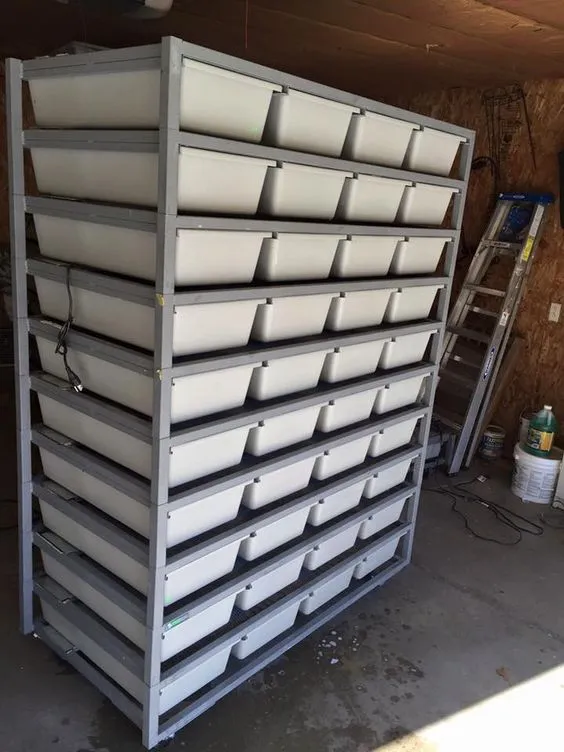
This characteristic combined with the fact that the Pitoni are driven by primary needs and do not require large environmental enrichments (trons, plants etc.) has led the breeders to adopt mainly a solution of housing, the rack.
Professional Rack from 40 places
The racks are real "condomini" where it is possible to accommodate a large number of Pitoni of different size, each box can present inside a den in which the snake will go to refuge; in general the full walls allow the python to stay in the dark and feel protected avoiding unnecessary stress as the transparent glasses of the skulls. This solution is recommended for those who intend to start breeding and reproducing different specimens, in case of few animals it is possible to adopt the classic glass case, although the latter is aesthetically more satisfying for the eyes of a visitor but much less from the point of view of the well-being of the Pitone.
It is important for questions of dominance to always hold a single Pitone for teca, especially in subadult and adult phase. Exceptionally in case of lack of space it is possible to keep the newly born baby together in a sort of Nursery, always remembering to feed them individually in separate places. This will be deepened in the next chapters.
The ideal temperature for a real python ranges between 25°C and 32°C.
It is fundamental in the design of a terrarium/rack to take into account a cold area and a warm zone that makes the temperature fluctuate between these two values, the heating system in fact must always be placed SOTTO and not inside the box/club but above all in correspondence of a third of the total surface. This solution will allow the animal to be able to decide independently which temperature to prefer, moving within the teca or in some cases moving and thinning the substrate.
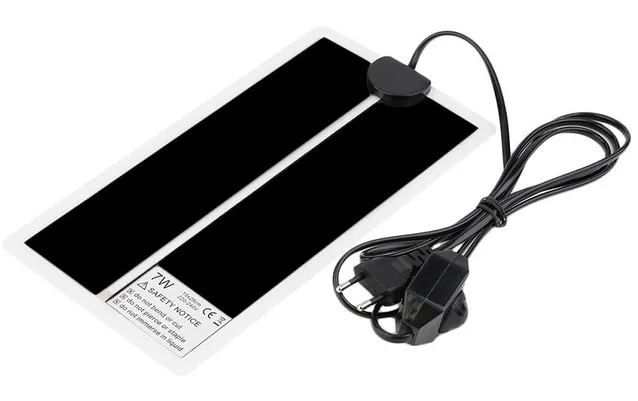
The perfect tool to maintain the right temperature in a real Pitone teca is the heating mat, as the heat spreads evenly over all its surface.
I recommend other instruments such as the heating cable, which concentrates heat in a limited surface, but above all never use a heating or UV lamp. Both of these methods are likely to cause the serpent injury and burns.
7W (Watt) - 15x28cm Heating Mat
The heating mats exist in different sizes, both from the point of view of the size and quantity of Watt, of course the greater the size also the wattage and the heat produced.
In most other breeding cards you will find used together with heating another fundamental tool, the thermostat. This object through a probe is able to detect the temperature and give or remove feed to the mat according to the detection.
For 14 years I have been practicing real pythons without using thermostat, for two reasons: practicality and reliability.
As for practicality I have never considered an excellent solution to keep an empty tub only to measure the average temperature, this problem could be overcome by putting the probe in one of the tanks that host a Pitone, but what happens if the probe fails in the water bowl? A very low temperature is detected and all the mats begin to overheat the tanks with a potential danger to the Pitoni themselves. Not to mention other types of malfunctions that can happen with thermostats, even very trivially that you discard the batteries, for those powered by battery. Hence my lack of reliability towards the thermostats for breeding.
So how did I solve this problem? With low-watt carpets.
From the beginning I began to adopt 7W heating mats (28 x 14cm) discovering that keeping them on 24/7, in a normal house temperature condition (so 25-27 °C in summer and 18-20 °C in winter) are able to develop at most a temperature of 32-33 °C in the hot teca area. In this way there is no concern for the thermostat and the probe but above all we have a heating that at maximum power can not cause any damage or burn to our Pitone. Some of them, the new models have even a small thermostat integrated into the wire.
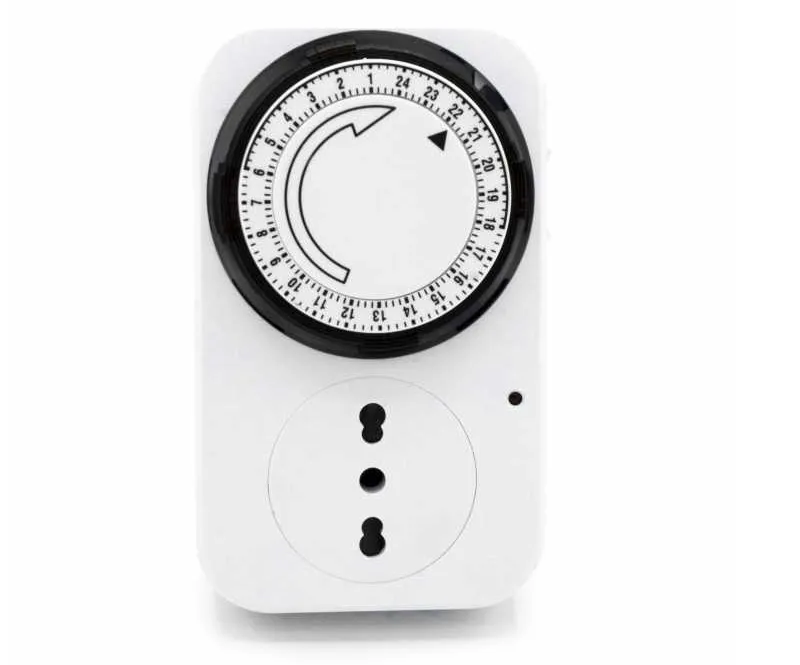
I recommend to use during the hottest phases of the summer a timer, to completely remove the power in the hottest hours of the day, especially when already in the house you arrive to touch the 31-32 °C.
This solution is ideal for all those who want to keep a Pitone between the home walls at a "normal" temperature of the house, for other types of accommodation instead (cantina, garage etc.) I recommend to carefully evaluate the average temperature of the room and calibrate the right wattage of the mat.
WHAT TO USE:
Once we find the right size of the roof and the proper heating we will have to put on the bottom a substrate that will also act as a thermal insulation.
Substrates are divided into two macro-categories: compact and granular.
For compact substrates are all those substrates "sheets" that are newspaper paper, bulinate paper or medical sheet.
Pro:
Easy to remove and replace
Appearance very ordered
Pitons cannot ingest pieces
They have a less strong typical smell
They occupy little space
Do not soil the environment during change
Easily storeable and transportable
Against:
They get dirty easily
Even the water stains them as if it was dirty
The ordered appearance sometimes lasts little
They must be controlled and replaced more often
Pitons tend to flip them and stick under
Isolate and absorb little smell
Once wet they tend to tear off
Bulinata paper stained by water
THANKS
For granular substrates, however, they mean all those substrates "to pieces" fine like sawing or aspen or big as coconut wood.
It is FONDAMENTAL in the case of use of a granular substrate, that it is strictly DEPOLVERIZED, as the powder will cause infections to the airways (bocca-polmoni) of our snake.
Pro:
Increased thermal insulation
Easy removal of feces without total change
The Pitoni shape the bottom to their liking
They absorb the smells of feces very well
Water does not cause change of color or dirt
Against:
Wet sawing has a slightly pleasant smell
The appearance is much more chaotic
Some pieces can be ingested by the snake
The total change dirty the surrounding environment
Larger storage volume in relation to the amount of changes
Removal of a polluted sawdust
In general there is no ideal substrate, it is a very subjective factor: regarding my experience I have used for many years the depolverized sawing available in any supermarket as a hamster and rabbit litter. In the last year I have experienced the bulinata paper, initially very appreciated for its ease of change and storage, it is beginning to become problematic as it has an always dirty look, it tears up and my Pitoni have now learned not only to bend it and go there but to make us real origami.
Another factor to consider is the intrinsic character of each sample of Pitone, there are the most ordered ones that maintain a clean substrate for a long time and those instead who like to mess up all over the bowl bend the sheets etc.
In this case it is possible to adopt a hybrid solution with different types of substrate depending on the character of the Pitone.
The WATER
One of the most often asked questions is: but do the Pitoni drink?
The answer is yes, the Pitoni not only drink, but use water also for other purposes. One of the fundamental elements that must never be missing in the teca of a real Pitone is a source of water.
During its growth the snake will use this container certainly to drink but also to bathe during the mutation phase or cool down during the hottest days. Many other breeding cards speak of a system that is large enough to make the Pitone completely immerse in case of need; but this condition is not always possible to respect therefore by experience I tell you that it is enough also a small pot that can soak even partially.
Basically in the choice of the right solution is the shape and weight, this because the Pitone moving in the teca will inexorably tend to overthrow and move everything you will find around. I recommend that you use something that has the lower base at least of the same width as the upper one so that the python passing over can not move the center of gravity and overthrow everything, so avoid bowl-shaped solutions.
If the weight is not sufficiently high, the python will try to slip below, especially in the presence of irregularities (opens) on the sides that will be taken from the snake as an entrance to an even smaller den (so even more beautiful) in order to be able to hide.
To start breeding a small baby of Pitone you can use a very practical solution or ashtray, of those heavy glass or ceramic, only shortness not to fill it too much or the water will come out from the notches. Another comfortable solution is to use a bowl for dogs of trapeze dogs with the wide base, making sure that it does not have the classic side hole. There are many types of containers in the form of much more natural stone, you can search on Amazon or in specialized shops to find the right compromise, always respecting the two basic requirements.
COSA MANGIANO (LIMENT)
Most snakes included the real Pitone eats rodents.
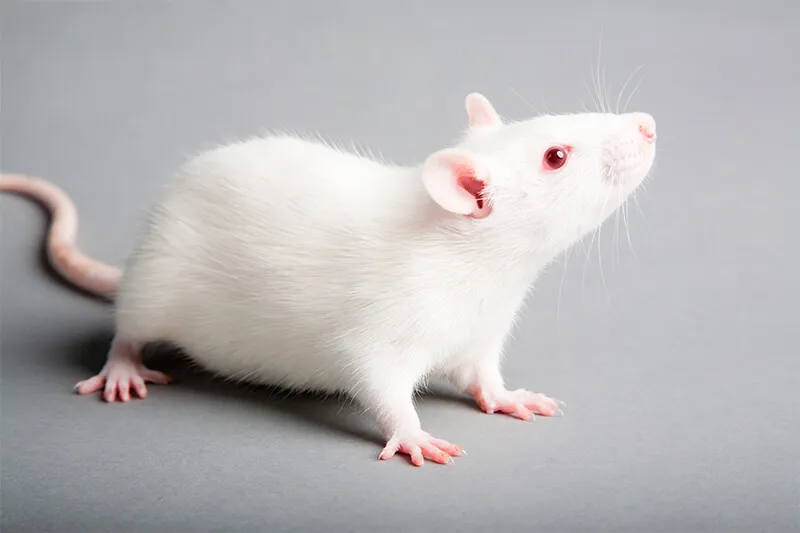
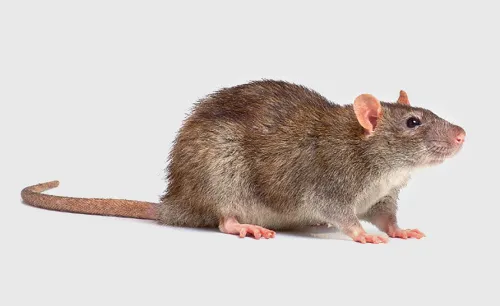
Not all rodents though, attention, it is good to administer to your real only Topi (Mus musculus) and Ratti (Rattus norvegicus).
Mus musculus (Topo)Rattus norvegicus (Ratto)
I strongly discourage, even in case of extreme necessity, to administer other types such as gerbil hamsters or cow rats, this because their taste is stronger and the Pitoni get used to this flavor becoming unappetint to the rest, only that these rodents are mediumly more difficult to find but above all they cost much more because they are considered pets. Rather let them fast until they return to find rats and rats, always that you do not talk about too many months.
The rats and rats cannot be those found in the city and in the countryside, they are full of parasites that would lead the python to death a few days after ingestion. Rodents must come from a live food farm or a store that supplies themselves from these farms, only in this way will these animals be eligible for ingestion by reptiles.
These meal rodents can be found in two forms: alive and frozen (deco)
My advice is to start immediately feeding your own Pitone with frozen food, here are some reasons why it is more convenient:
Security, they cannot bite by wounding the snake in sensitive areas of the body (eyes)
I can be ordered in large quantities and stored so as to carry out maximum 1-2 orders per year
They are ethically more acceptable as they are quickly and painlessly shot down
Live food is not always available and should be managed if bought in excessive number
There are some exceptions for which you may need to administer some live mouse, such as a particularly unexpected baby who refuses to eat deco (also swallowing it), in these cases you can administer some live rats immediately trying to convert it to the deco using perhaps the train technique, which we will deepen in another chapter.
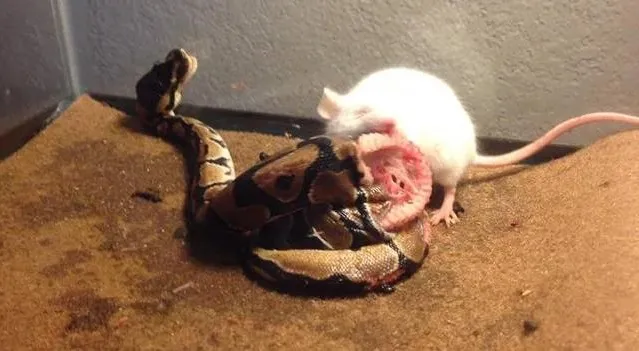
However, the rat's teeth are much longer and sharper than the rat, this factor combined with a greater stace can seriously jeopardize the snake during the hunting phase. A sharp bite at a sensitive point like the head could lead to the death of the snake.
Rat attacks and kills a real python (I hope this image will die in your mind to remind you of never giving live rats)
The difference between rat and rat is in fact the size: a newly born rat (pinky) weighs 1-2g and comes to weigh up to 35-40g as an adult, instead a newly born rat weighs already 10g and as an adult comes even to touch 500g in some cases.
It follows that to get a real python to a certain reproductive weight it will be necessary to administer even or only rats. This is because some breeders decide to avoid the passage of rat-rat taste and make the very first meals of their own Pitoni with newly born rats.
Below is the report that I personally think most correct among Pitone's weight and the weight of the prey to be administered, over the years has always spoken of the rule of 20% (that is, the prey must weigh 20% of the total weight of the Pitone) this "rule" is very limiting and does not take into account the experience that with the years a mature breeder:
PEOPLE
50-70g
10-15
150-200g
30
500-600g
100g
800-900g
150g
1500-2000g
250g
2000g +
250g +
The most attentive of us will have noticed in this table a strong jump from the prey from 30g to the one from 100g, this because it is in this phase that I pass from the adult mice from 30g to the small rats from 100g. At each step to a next prey will notice your Pitone grow and change very quickly. A signal that the measurement of the given prey is no longer enough is the fact that your python is not inflated during ingestion/digestion and does not seem to have made a meal.
Real female python after eating an adult rat
In case you have correctly chosen the deco meal option, I recommend you disconnect it using only the maria bath method. Take a high box, insert the prey to thaw and fill it with hot water coming out of the normal home tap. Do not use boiling water previously heated but above all do NOT use MICROONDE, apart from a purely hygienic issue, but above all because the waves to heat excite excessively the rodent cells, which once ready will result "cooked" and tend to thrive, which I warmly discourage you.
Real pythons, like other snakes, during their life cycle grow, both in length and thickness. Unlike mammals that adopt an increase through cell renewal, reptiles need to make "steps" called mute.
Especially at the end of a very substantial meal the Pitone begins the process that will culminate after 6-7 days with a new layer of skin:
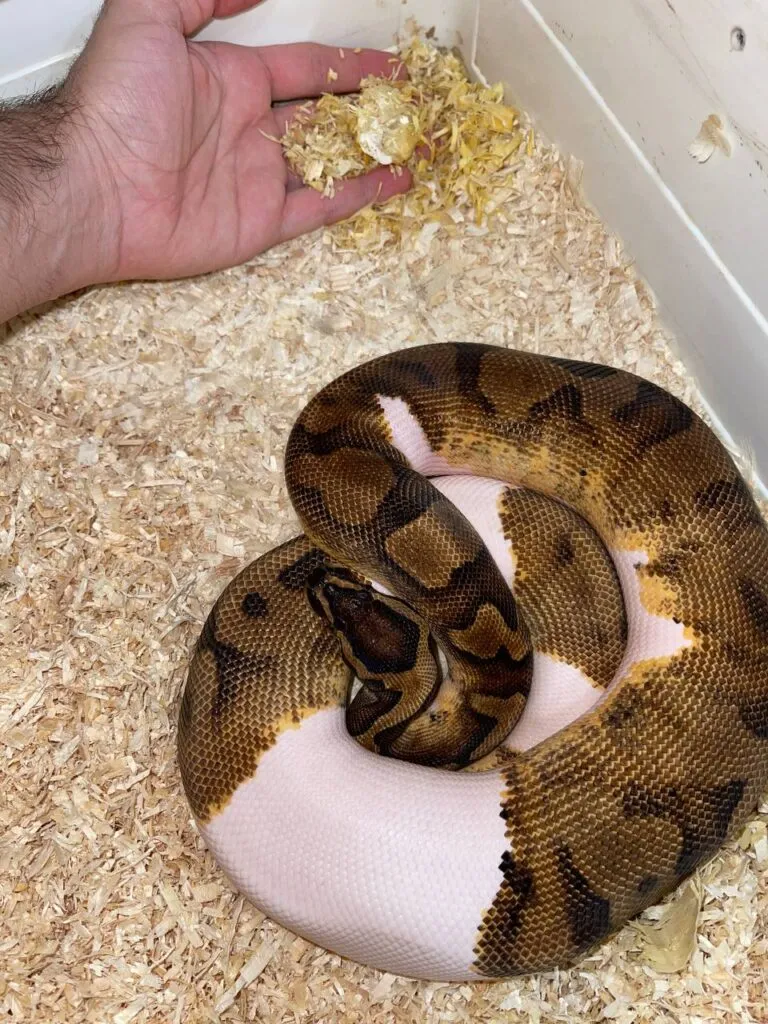
Day 1-2: the color of our python begins to turn off, the white pattern parts begin to tend to pink, that contrast and brilliance begin to disappear and in general it turns out less vispo and active. At this stage it begins to increase the presence of a liquid below the skin which aims to separate the upper layer of old skin from the lower with the new.
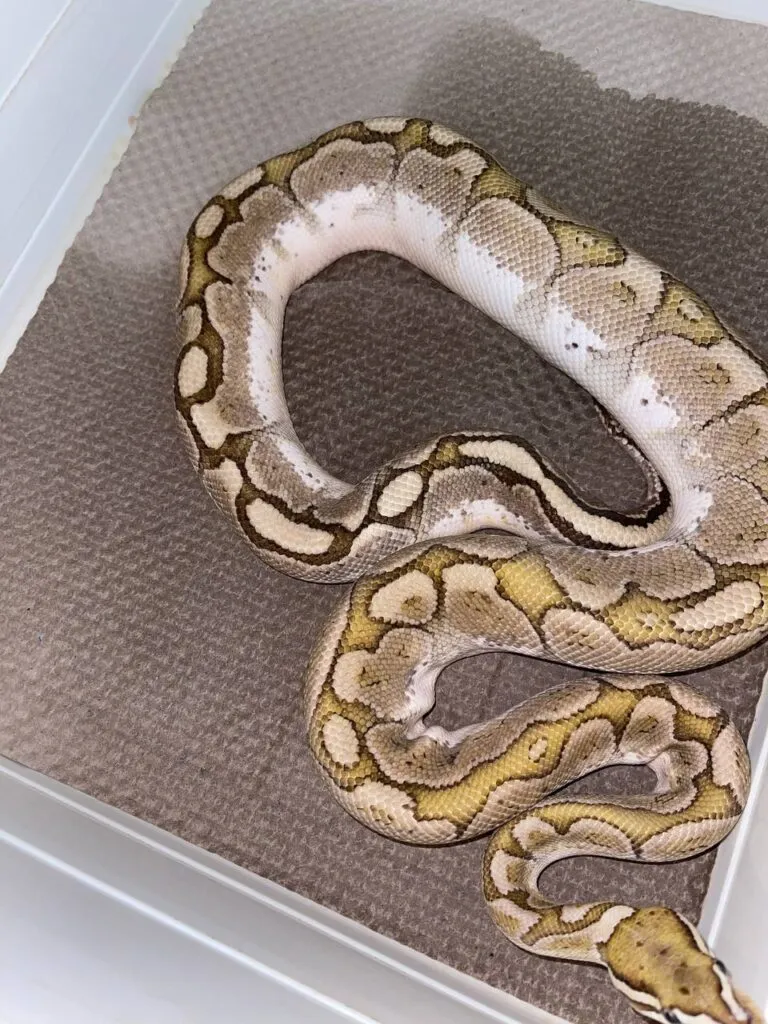
Day 3-4: The python turns out to be a very off colour, lattiginous whitish, this color is given by the liquid that at this moment is visible and covers the skin by appannating it, including the eye of our Pitone that seems almost to have a cataract.
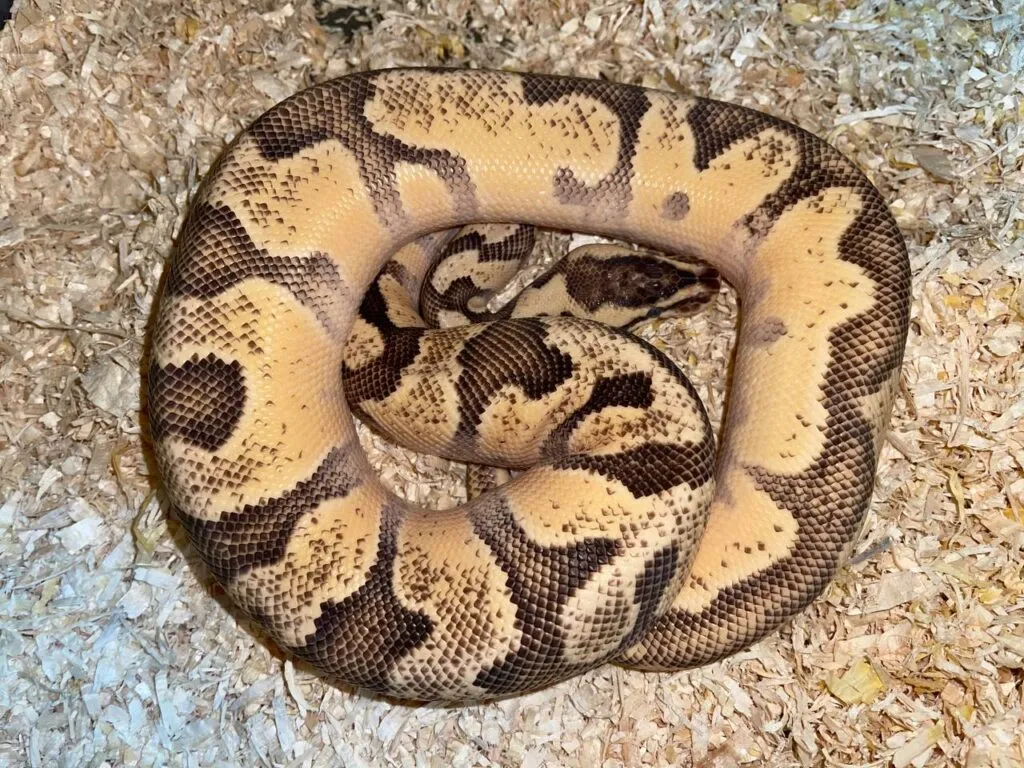
Day 5-6: The python resumes 90% of its color, the separation between the two layers happened and the liquid is gone, the snake is near to the muta, in this period it must be sprayed with water abundantly to help the final mutation, of them gradually begin the process of exit from its old skin.
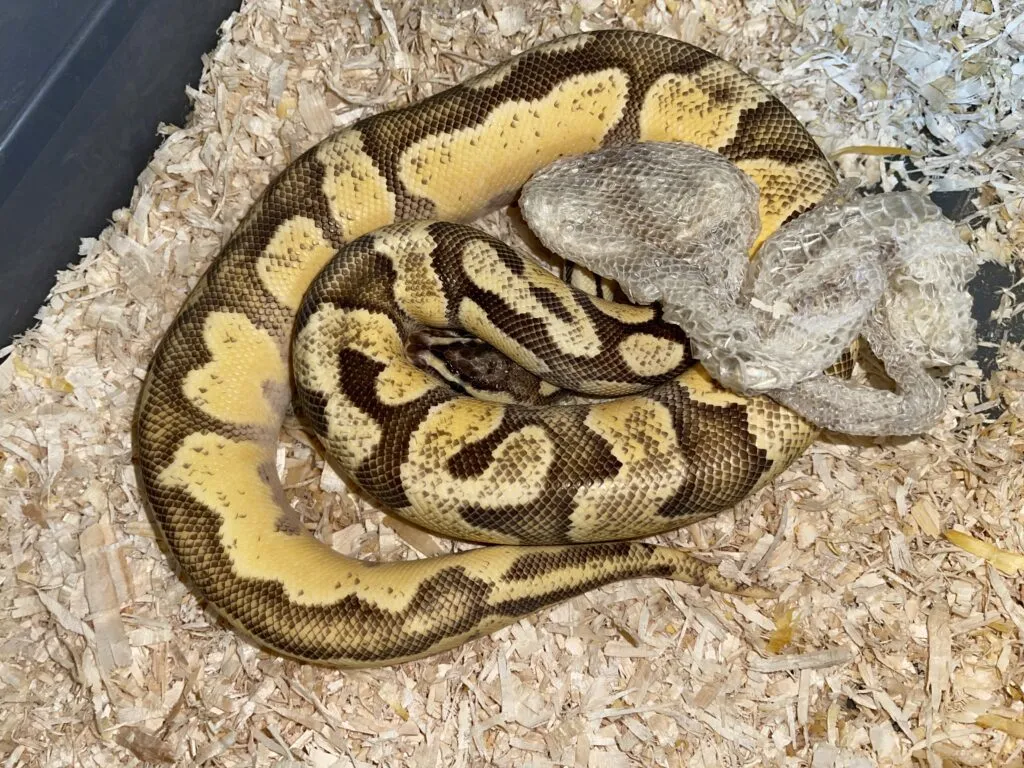
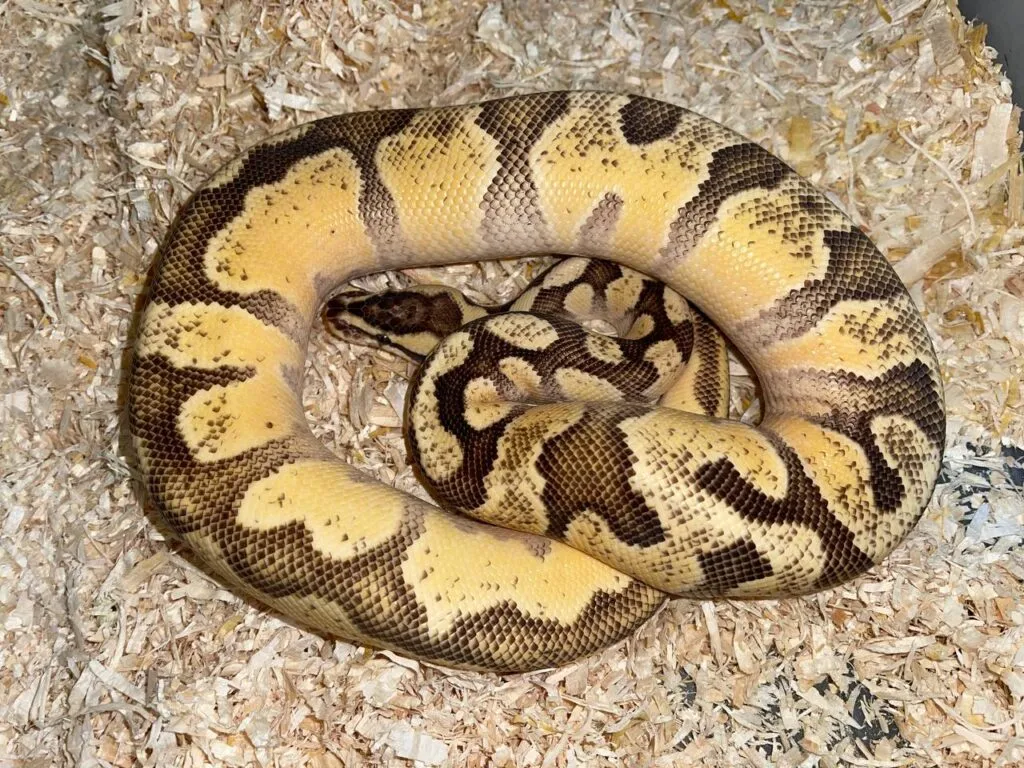
Day 7: Mute made, the color of the python returns to be brilliant, the muta is generally related to expulsion of feces so you will most likely find them along with the old skin.
ANALYSIS
The breeding of real pythons is generally very simple, suitable for those who first approach the breeding of snakes. Following those very few short notices, first of all the temperature, your Pitone will be fine and you will be able to see it grow without problems from baby to adult.
As soon as you take home you will begin to explore all the terrarium, especially if baby and during the evening hours, to take confidence with the surrounding environment; after this inspection that can last even a few days will begin to stabilize preferring to stand in the den or in a particular area of the teca that considers "safe".
In this species the food is not regular and infallible as for other boids, in the sense that it will not rarely happen that your Pitone, which until the previous meal has eaten quietly, refuses the meal. This situation generally happens after a regular and frequent meal period, it is as if the python saturated and had to make a "detox" period. Do not worry, check the temperature and humidity parameters, if it is ok, try again the meal waiting for a prolonged period, at least 2-3 times the interval adopted previously. Always remember to monitor the weight and see that it is not lost too much, otherwise consult a veterinarian immediately. Real Pitons are sedentary animals, which accumulate excess fat as an energy reserve since they were born, therefore in a well-started specimen a fast of a month is not a problem, do not get caught by paranoia.
 This solution is ideal for all those who want to keep a Pitone between the home walls at a "normal" temperature of the house, for other types of accommodation instead (cantina, garage etc.) I recommend to carefully evaluate the average temperature of the room and calibrate the right wattage of the mat.
 Day 3-4: The python turns out to be a very off colour, lattiginous whitish, this color is given by the liquid that at this moment is visible and covers the skin by appannating it, including the eye of our Pitone that seems almost to have a cataract.
 Day 5-6: The python resumes 90% of its color, the separation between the two layers happened and the liquid is gone, the snake is near to the muta, in this period it must be sprayed with water abundantly to help the final mutation, of them gradually begin the process of exit from its old skin.
 Day 7: Mute made, the color of the python returns to be brilliant, the muta is generally related to expulsion of feces so you will most likely find them along with the old skin.